
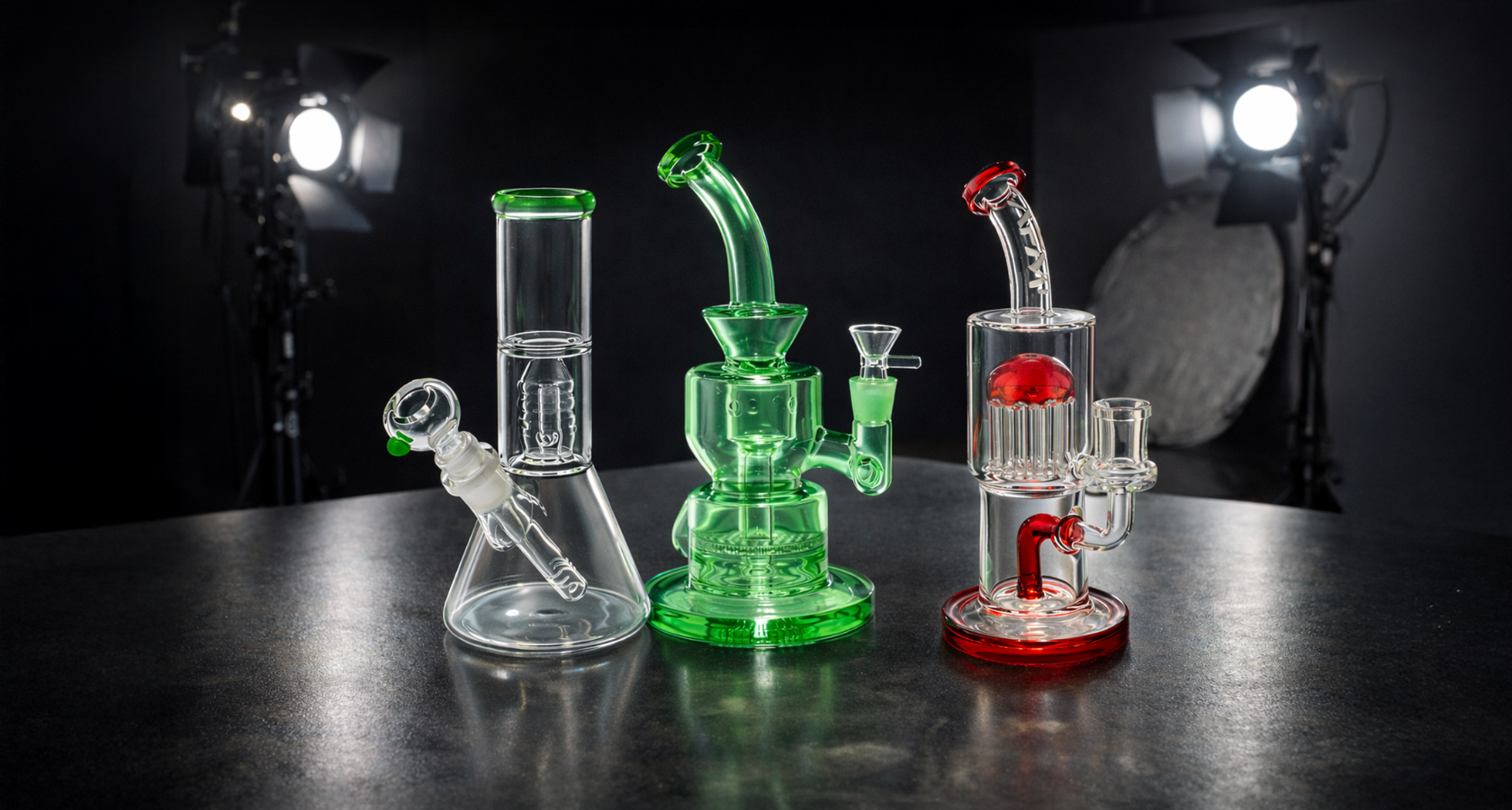
If you’ve ever browsed a shelf of water pipes and wondered why some have intricate glass chambers inside while others are simple tubes, you’ve met the percolator. It’s one of the most talked-about features in modern glasswork, and for good reason. Understanding how it works can help you choose a piece that suits the way you like to smoke.
Whether you’re upgrading from a basic beaker or buying your first piece, it pays to shop from a specialist. A trusted Australian glass bong shop can show you how different percolator designs compare, explain the differences in build quality, and help you find something that fits your budget. Interest in glass bongs Australia-wide has grown steadily, and percolators are a big part of that shift toward better-designed pieces.
What Is a Percolator?
A percolator (or “perc”) is a glass component built into the water chamber of a bong. Its job is to break smoke into many smaller streams of bubbles as it travels through the water. Instead of one large stream rushing upward, the smoke is diffused across a wider surface area.
Percolators are usually made from the same borosilicate glass as the rest of the piece, fused inside the tube or chamber. They come in many shapes, and each one changes how the smoke moves.
How Percolators Work
When you draw on a bong, smoke is pulled down through the downstem and into the water. Without a percolator, it exits the downstem in a handful of large bubbles and heads straight for the mouthpiece.
With a percolator, the smoke is forced through slits, holes, or arms that split it into dozens or even hundreds of tiny bubbles. More bubbles mean more contact between the smoke and the water, which delivers a few noticeable benefits.
Key Benefits of Using a Percolator
Cooler smoke. Greater contact with water means more heat is drawn out before the smoke reaches your mouth. Many people find this makes each draw feel less harsh on the throat.
Smoother hits. Diffusing the smoke into fine bubbles softens the overall sensation. Users often describe the experience as gentler and more comfortable, especially compared with a basic single-chamber design.
Extra filtration. Percolators give the smoke more time and surface area in the water, which helps catch some of the ash and particulate matter. Water filtration is never perfect, but a good perc improves on a plain tube.
Better flavour. Cooler, cleaner smoke lets the natural taste of your material come through more clearly, which many enthusiasts value.
Popular Percolator Types
There’s no single “best” perc, since each has its strengths. Here are the designs you’ll see most often:
Showerhead percolator. A disc with many small slits sits at the base of the downstem. Smoke is pushed out in a fine spray, giving strong diffusion with relatively little drag.
Tree percolator. Multiple arms branch out from a central tube, each with slits along its length. Tree percs offer excellent diffusion and are a common feature in glass bongs Australia collectors look for.
Honeycomb percolator. A flat disc with dozens of tiny holes, resembling a honeycomb. It creates lots of small bubbles and very smooth airflow, though it can add resistance when new.
Inline percolator. A horizontal tube with slits is fused directly into the main chamber. It’s a streamlined, durable option that works well in straight-tube designs.
Turbine percolator. The smoke is directed through angled slits, which makes the water spin as you draw. It’s as fun to watch as it is effective.
Matrix percolator. A more elaborate mesh of slits and channels that creates intense diffusion. It’s a favourite among those who want the finest bubbles possible.
Do More Percolators Mean a Better Bong?
Not necessarily. Stacking several percolators can increase diffusion, but it also increases drag, meaning you need to pull harder for each hit. Extra glass also adds weight, cost, and cleaning time.
For most people, one well-designed percolator strikes the right balance. If you prefer easy airflow, a simple inline or showerhead perc is often ideal. If you’re after maximum smoothness and don’t mind a bit more effort, a multi-perc setup may be worth exploring.
Choosing the Right Percolator for You
Consider these points before you buy:
- Airflow preference: Do you want a free-flowing draw or maximum diffusion?
- Size and portability: Bigger percolator setups tend to mean taller, heavier pieces.
- Cleaning: Complex percs have more nooks and crannies, so they need more upkeep.
- Budget: Intricate percolators require more skilled glassblowing, which is reflected in the price.
- Glass quality: Thick, quality borosilicate is more durable and better able to handle temperature changes.
Keeping Your Percolator Clean
A percolator only performs well when it’s clean. Resin and residue can clog the slits and reduce airflow. Rinse your piece regularly, and give it a deeper clean with isopropyl alcohol and coarse salt every so often. Shake gently, rinse thoroughly with warm water, and let it dry completely. Regular cleaning keeps the perc working properly and protects the flavour of every session.
Final Thoughts
Percolators are more than a decorative flourish. By breaking smoke into fine bubbles and increasing contact with water, they help deliver cooler, smoother, and cleaner draws. The right design depends on your preferences for airflow, size, and budget, but understanding how each type works puts you in a much stronger position to choose well.
Take your time comparing options, look for quality glass, and don’t be afraid to ask questions. A good percolator, matched to the way you like to smoke, can genuinely transform the experience.
