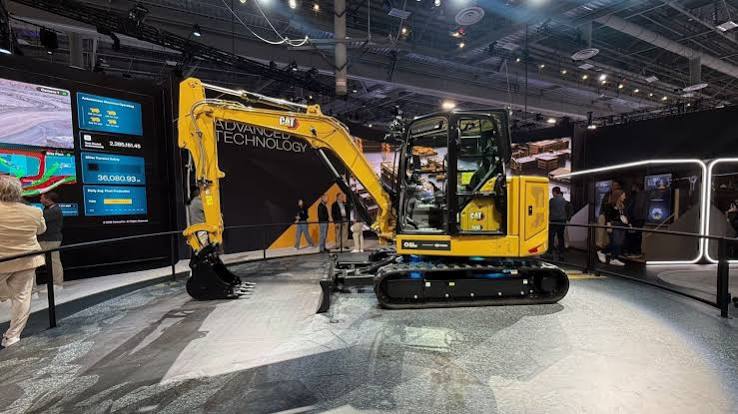
The construction industry has been wrought with challenges that range from stringent environmental laws to severe labour shortages cause the industry to look at alternative solutions. Manufacturers of heavy machines on the other hand see these issues faced by the construction industry as an opportunity to enhance their bottom lines via the development of intelligent machines. These intelligent machines that have been developed by leading manufacturers such as Volvo CE, Komatsu, Kubota, Hyundai, Takeuchi and Case do not only meet environmental regulations, but they also do not require excessive intervention from humans to perform tasks such as digging, trenching, drilling, grading and excavating autonomously or though minimal input from humans.
Manual Labour and Machine Operator Shortages
The cost of manual labour has risen significantly over the past decade due to disinterest alternative employment forcing manual labour wages to increase. This has resulted in project managers to look towards machinery to fill the void and maintain project budgets comfortably. The same can be said for machine operators, given the fact that the pool of skilled machine operators has been shrinking, the integration of AI into machinery such as small excavators provides a crucial solution. Most construction equipment rental companies that offer small excavators for hire for instance offer semi-autonomous machines that enable even novice operators to take on complex tasks. Semi-autonomous excavators enable inexperienced excavator operators to perform precise digging and high quality grading which minimizes the need for rework significantly.
What the Future Holds
Although fully autonomous machines that are driverless is still not made widely available, the trend shows that the industry is indeed headed towards this objective at a rapid pace. Within this context small excavators are heading the trend in specialized scenarios where AI-driven semi-autonomous small excavators are quickly becoming a standard feature within the small excavator for hire sphere. AI integration into small excavators especially is being observed with manufacturers such as Doosan Bobcat with AI-powered tech such as “Jobsite Companion” which in essence is an AI feature that offers collision warning and object avoidance guides. Other features that do not involve A.I, but is being set as a high priority includes enhanced operator comfort and enhanced safety. Spacious and quieter cabs complete with air conditioning, ergonomic controls, digital displays and suspension seats are also becoming standard in most small excavators that are offered for hire. Whereas, within the scope of safety features, most small excavators include 360-degree camera views, robust protective structures such as T.O.P.S (tip-over protective structure) and F.O.P.S (falling object protective structure) which are crucial for operator safety. The latest models have also been noted to be more versatile than ever due to advanced hydraulics systems which offer load-sensors and coupling links that allow these small excavator models to be fitted with various attachments such as tilt-rotators and hydraulic hammers that can be changed quickly by operators without having to leave their cab maximizing machine functionality significantly. Small excavators are also paving the way for electric powered heavy machines based on the fact that much of the developments of electrification by manufacturers have been focused on compact machines.